
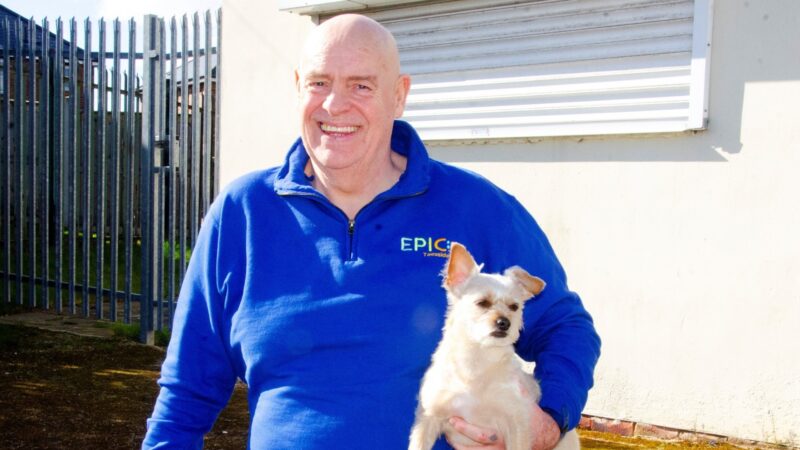
Following retirement, Paul Surtees naturally enjoyed a quieter routine with fewer social interactions.
So, when he started feeling shortness of breath he thought he was having panic attacks due to his lifestyle change.
He said: “It didn’t happen all the time, I thought it was because I’m no longer used to crowds.”
After going to his GP, the former charity CEO from Stockton-on-Tees was sent to the Tees Valley Community Diagnostic Centre for an ECHO (echocardiogram).
An ECHO is an ultrasound scan of the heart to assess its function.
Following these tests the heart failure service made contact to inform Paul of his diagnosis of heart failure.
He was seen in a heart failure clinic and offered participation in University Hospitals Tees’ cardiac remote monitoring service.
“I didn’t know anything about heart failure or the services available prior to my diagnosis. I had lots of questions.”
For the last seven weeks Paul, 68, has been using a special app and a monitoring kit to record his blood pressure, heart rate, oxygen saturation and weight from the comfort of his own home.
The data recorded is sent directly to the specialist heart failure team and his medication is adjusted to meet his needs during telephone consultations.
During National Heart Month, Paul is sharing his journey to raise awareness of heart failure symptoms and reassure others who have just received a ‘shock’ diagnosis like he did.
Paul added: “It’s been a journey into the unknown. I have been dealing with other medical issues alongside my heart failure.
“The team have been very supportive. They’ve empowered me to be involved in my care. I’m still learning but it’s been a good experience so far.”
Symptoms
Common symptoms of heart failure include:
- Breathlessness
- Fatigue
- Swollen ankles and legs
As well as experiencing the above, people can sometimes experience:
- Bloating
- Loss of appetite
- Weight gain
- Depression and anxiety
Paul’s message to others who are told that their heart is weaker than it should be is simple: “Stay positive”.
He added: “The cardiac remote monitoring service has helped me feel informed throughout.”
Trudy Hunt, heart failure specialist nurse, explained that symptoms of heart failure can vary from person to person.
She added: “If anyone is experiencing persistent, milder symptoms, such as persistent breathlessness, swollen ankles or extreme fatigue, contact your GP immediately. The GP may consider further investigations as this condition can affect anyone at any age for various reasons.
“If you experience sudden, severe breathing difficulties or chest pain it’s really important that you immediately call 999 or visit your closest A&E department.”