
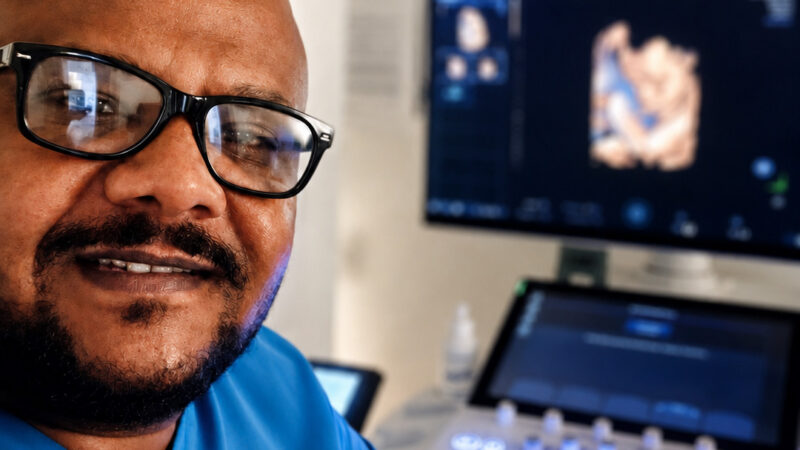
A refugee medic who fled persecution and torture in Sudan has rebuilt his healthcare career after volunteering at University Hospitals Tees helped restore his confidence and reconnect him with the profession he loves.
Sonographer Ahmed Bakheet arrived in Britain having lost almost everything. Years of conflict, family loss and political persecution had left him rebuilding not only his career but also his life. At times, he feared he might never work in healthcare again.
But through an innovative ‘Volunteer to Career’ programme developed by the national healthcare volunteering charity Helpforce and delivered through University Hospital of North Tees, Ahmed found a pathway back into clinical practice – enabling him to regain confidence, rebuild professional connections and ultimately return to sonography.
Medically qualified refugees
His experience highlights the contribution medically qualified refugees can make to healthcare in the UK when they’re given the right support to rebuild their careers. There are around 7,500 doctor vacancies and 21,600 unfilled nursing roles in England , while many refugee healthcare professionals remain unable to return to practice despite valuable skills and experience.
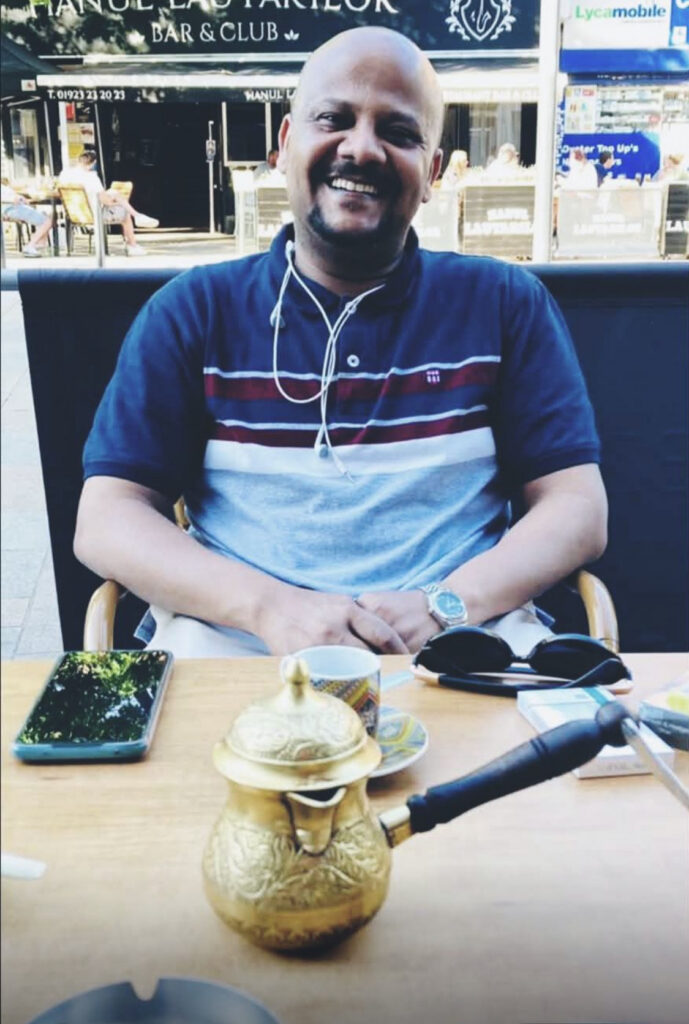
Helpforce believes Ahmed’s journey demonstrates what’s possible when medically qualified refugees are given the right support. Backed by organisations including NHS Employers, the Refugee Council and Breaking Barriers, the charity is calling for greater investment in specialist programmes that help them re-establish careers – with potential to release a “torrent of talent” into the UK’s healthcare workforce.
Ahmed, 40, left Sudan in 2010 after political instability and persecution made it impossible to see a secure future for his family. While working as a radiographer in Saudi Arabia he completed a Master’s Degree in Diagnostic Medical Ultrasound and continued developing his clinical career.
Political activism
Years later, as conflict escalated in Sudan, Ahmed went back home to find his family. What he discovered was devastating: two of his children and his brother had been shot dead by government forces. Soon afterwards, he was arrested for political activism and imprisoned for six months, during which time he endured torture. “I lost a part of myself during my incarceration,” he said. “You don’t forget those experiences.”
Following his release, Ahmed returned to the UK but found that his job was no longer available, leaving him homeless and destitute. After claiming asylum, he spent three and a half years unable to work while waiting for a decision on his application.
In June 2025 Ahmed was granted refugee status. Soon after, he joined Helpforce’s Volunteer to Career programme at University Hospital of North Tees.
Volunteering
He began volunteering as a ward assistant before moving into the radiology department, where staff recognised his clinical background and helped him reconnect with his profession.
“It helped me remember what I could do,” he said. “Step by step, I started to feel like myself again.”
The experience gave Ahmed the confidence, recent NHS experience and professional references he needed to secure a role as a sonographer with a private healthcare provider. He now spends his working week performing advanced pregnancy scans.
A new beginning
Today Ahmed lives in Stockton-on-Tees with his wife Refga, teenage son Mo and baby son Ezzeldin, whose birth earlier this year marked a new beginning for the family after years of unimaginable loss. Looking back, he believes volunteering was the turning point that made everything else possible.
“I’m proud,” said Ahmed. “After everything, to be able to work again and help people means a lot.”
Amerjit Chohan, Chief Executive of Helpforce, said: “UK healthcare continues to face significant workforce challenges, while many medically qualified refugees are struggling to find routes back into careers they have spent years building.
“We have seen first-hand how structured volunteering can help individuals regain confidence, understand UK healthcare systems and move into frontline clinical roles.
“Ahmed’s story demonstrates the incredible resilience, experience and determination that refugee healthcare professionals bring. Greater investment in programmes like Volunteer to Career could release a torrent of talent, helping thousands more skilled clinicians rebuild their careers and put their expertise back where it belongs – caring for patients.”
Ahmed’s message to others rebuilding their lives is simple: “Volunteering gave me a way to start again. It helped change my life and it could do the same for others.”
Inspiring
Ramit Imtiaz, Advanced Practitioner in Radiology at University Hospitals Tees, said:
“Ahmed’s story is incredibly inspiring. Despite everything he had been through, he approached every day with professionalism, compassion and a genuine desire to help others.
“Although he was volunteering in a non-clinical role, it was clear that Ahmed brought the qualities and experience of an accomplished healthcare professional. He quickly became a valued member of the team, putting patients at ease and supporting colleagues across the department.
“Volunteering gave Ahmed the opportunity to reconnect with healthcare in the UK, while allowing us to see first-hand the skills and commitment he had to offer. His journey shows how pathways like this can benefit both individuals and the NHS.”