
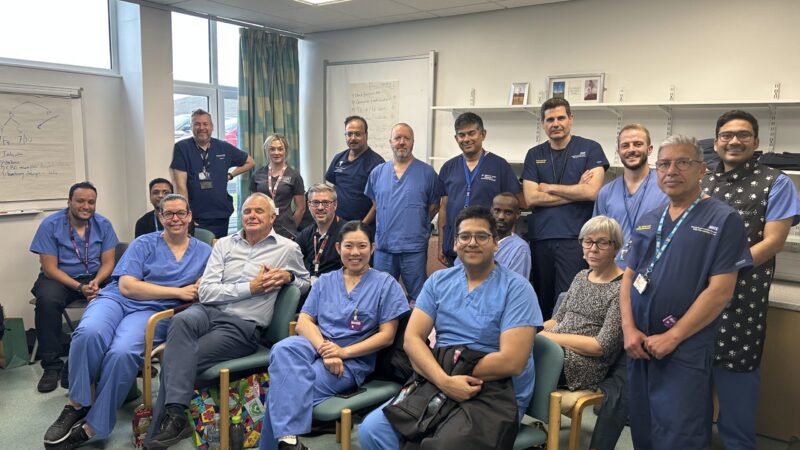
Virtual reality simulation training has formed part of the latest training for an NHS endoscopy service for the first time – as staff get to experience real life scenarios.
The endoscopic retrograde cholangio pancreatography (ERCP) procedure uses an endoscopic (camera test) device inserted through the mouth, to explore the upper gastrointestinal area of the body to treat conditions in the liver, gall bladder, bile ducts and pancreas.
Recently the trust hosted the Joint Advisory Group approved Basic Skills ERCP course and ERCP nursing training course over three days at the University Hospital of North Tees.
Professor Vikramjit Mitra, consultant gastroenterologist and course director, said “For the first time, we have introduced virtual reality simulation training for both the doctors and nurses.
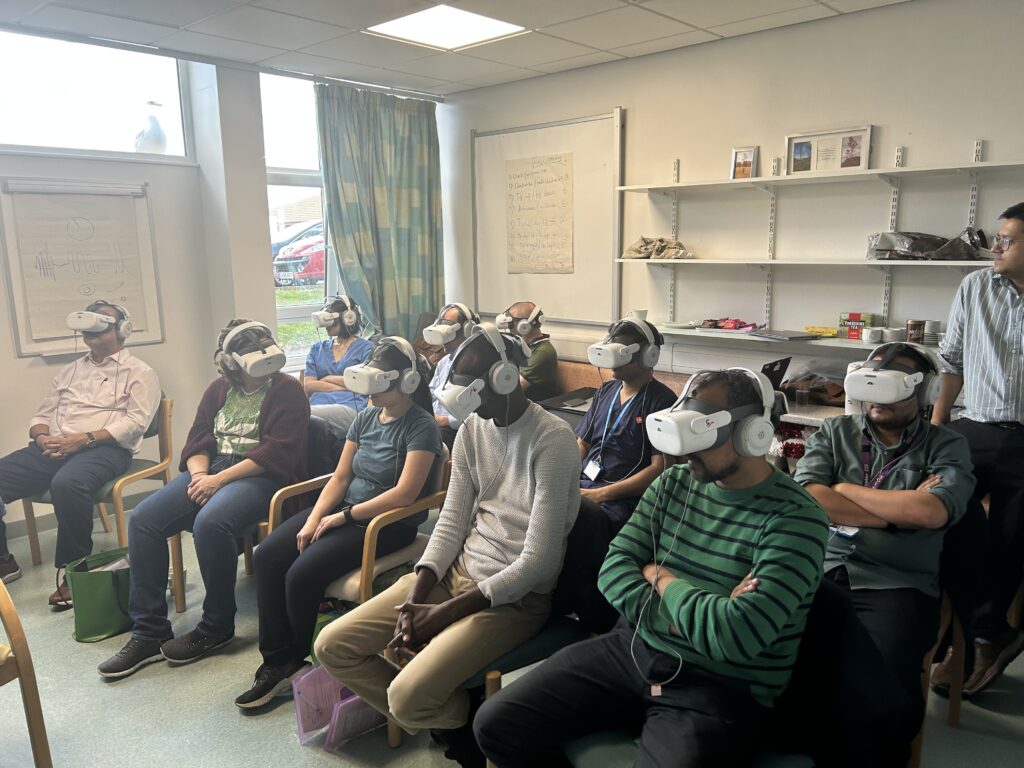
“The scenarios were based on non-technical skills and highlighted the importance of good team working in a multi-disciplinary environment. This was very well received by both the doctors and the nurses with excellent feedback.
“Both the delegates and the faculty felt that this can supplement conventional endoscopy training during the courses.”
Mae Machan, who leads the nursing course, said: “Using virtual reality simulation and real viewer during the nursing course was extremely helpful and beneficial to the delegates.
“I want to thank all the members of the endoscopy team for their contribution and support in making the training such a success.”
Both Mae and Vikram thanked Esther Selvaraj, trust clinical educator in endoscopy, for leading on the development of the virtual reality simulation videos.
Vikram added: “I’m so grateful to the patients who volunteered to not only share their experiences but have also agreed to be an active part of the course by providing the opportunity to the doctors and the nurses to test their skills on a real person.
“Of course, it’s all carried out under strict supervision and is very safe, but I cannot thank them enough.”
“We have been joined by colleagues from around the country who have shared their valuable experience. We can’t run these sessions without that kind of support.”